Walking With Dinosaurs
Path of Titans Dimorphism Guide

Why Dimorphism is Important
In order to fully grasp why dimorphism is important in the context of profiles, we must first understand why it exists to begin with. In nature, sexual dimorphism is oftentimes a crucial element when finding a suitable mate; females and males alike are picky when choosing partners, and must take into account the health, attractiveness and strength of potential suitors.
The blue-footed boobie on the left has more pigmented feet, and would thus be considered more desireable as a mate.
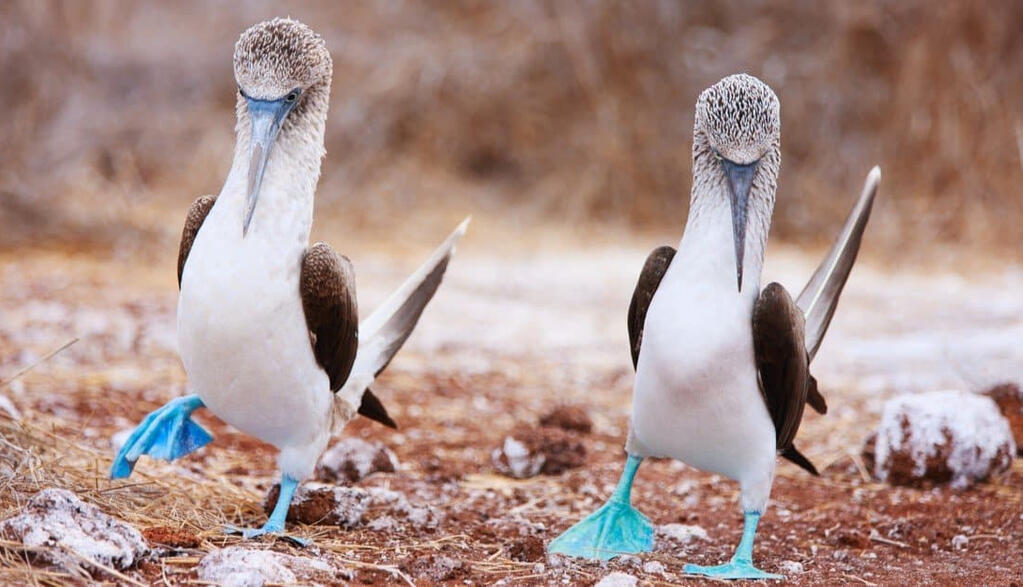
"Each new generation highlights the reason blue feet work for the booby. The color comes from carotenoid pigments that are ingested in the bird's fresh fish-rich diet. Any bird that is weak or unhealthy will struggle to feed itself and therefore will not command the brightest blue for its feet. The intensity of blue, whether weak or strong, signals the male's health and potential as a mate, which means that breeding females can make a decision by looking at a male's feet during a mating dance."
To transfer this onto a game setting, dimorphism is also useful in circumstances where you need to immediately know the gender of another dinosaur. Take Allosaurus and Eotriceratops, for example: these two territorial dinosaurs need to know at a glance whether or not another of their species is friend or foe, and dimorphism is the easiest method of determining this, given there is no scent system or other way of telling apart the sexes in the game. It's important for these creatures to not let a trespasser onto their lands, unless they are a potential mate - in which case, they need to be able to quickly tell whether or not they are the opposite gender or not.
Two male pheasants fighting over territory.
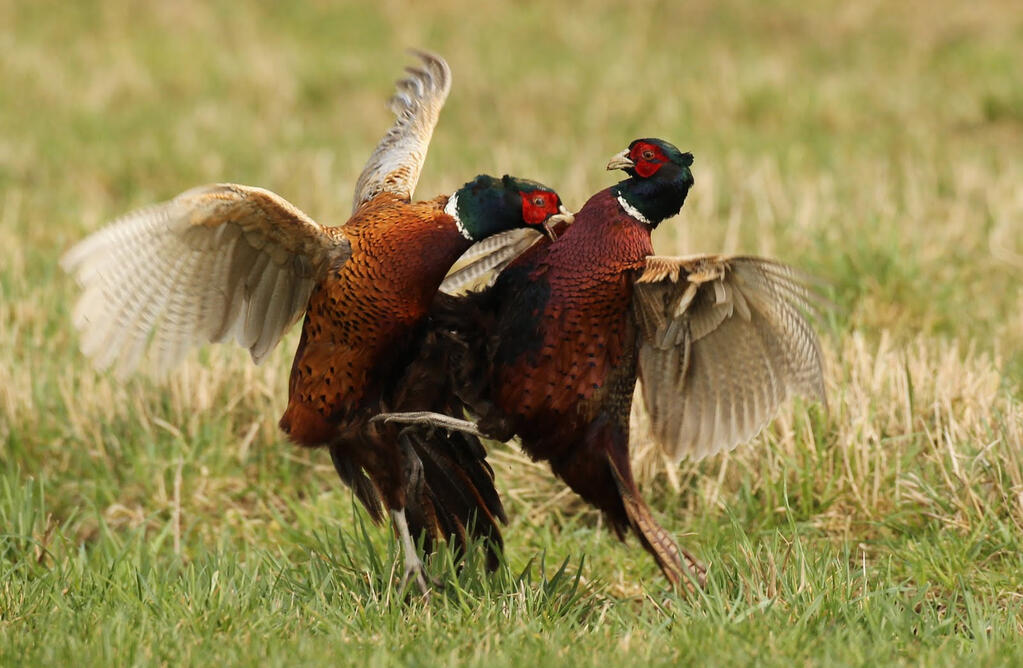
"Male pheasants are typically territorial, and in their breeding season, this territoriality is more pronounced. During breeding season, male pheasants become more aggressive to mark their territory and make claims over hens. They will screech, crow, squawk, and cackle as they try to keep other pheasant roosters away. When triggered, they may fight an intruder, and such fights are potentially deadly."
If an animal does not follow the listed dimorphisms, they should be considered less as a potential mate by the rest of their species. Naturally, a creature would want to give their offspring the best chance of success, so the parent can pass on their genes and continue living through them; if an animal lacks a certain display feature - which is used to determine fitness and health - they would not be seen as a desirable mate. The likelihood of that unhealthiness being passed down to the next generation and lowering their rate of survival is higher, and they may not be a good parent due to their unfitness and inherent inability to provide even for themselves. If there are more desirable and fitted options available, a creature would opt to choose those over any others who may not meet the standards setSexual dimorphism offers a reliable way to determine not only who is who, but who is the best choice for partnership; an animal looking for a mate oftentimes wouldn't go with the first individual they saw, they have standards that must be met. Crests and display features are the best and most noticeable examples of sexual dimorphism; crests and bright colors require more energy to be spent on upkeeping those certain features, which means the animal possessing them is not under much stress and therefore can expend resources towards their displays. An animal who can't afford to expend their energy into a dimorphic crest is likely to be sickly or deformed in some way, and would not be considered an ideal mate to others of its species. If there are other, better options to choose from, an animal will almost always choose the healthier and more suitable partner over one who is lacking in some way to ensure a greater chance of offspring, and their bloodline, surviving.
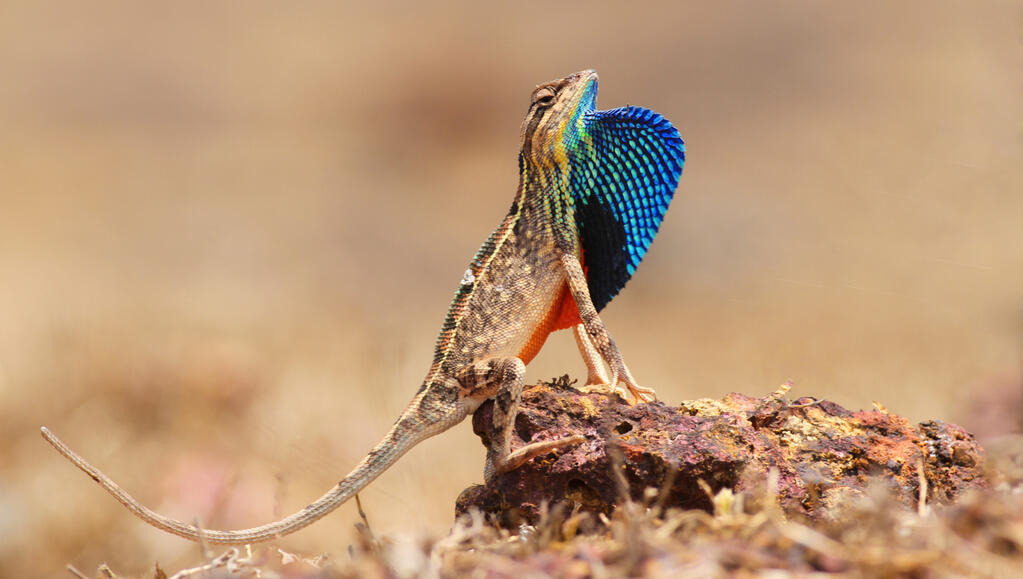
A male fan-throated lizard flaring his colorful throat to attract females.